
August 15 is a big celebration in most European cities. It is a religious event, honouring the Assumption of Mary, and the day is marked with a principal feast of the Blessed Virgin, or the mother of Jesus Christ. The Assumption of Mary is celebrated across Europe, and if you’re visiting in August, here is where you can join in the festivities and celebrations in Poland, Spain, Greece and Romania.
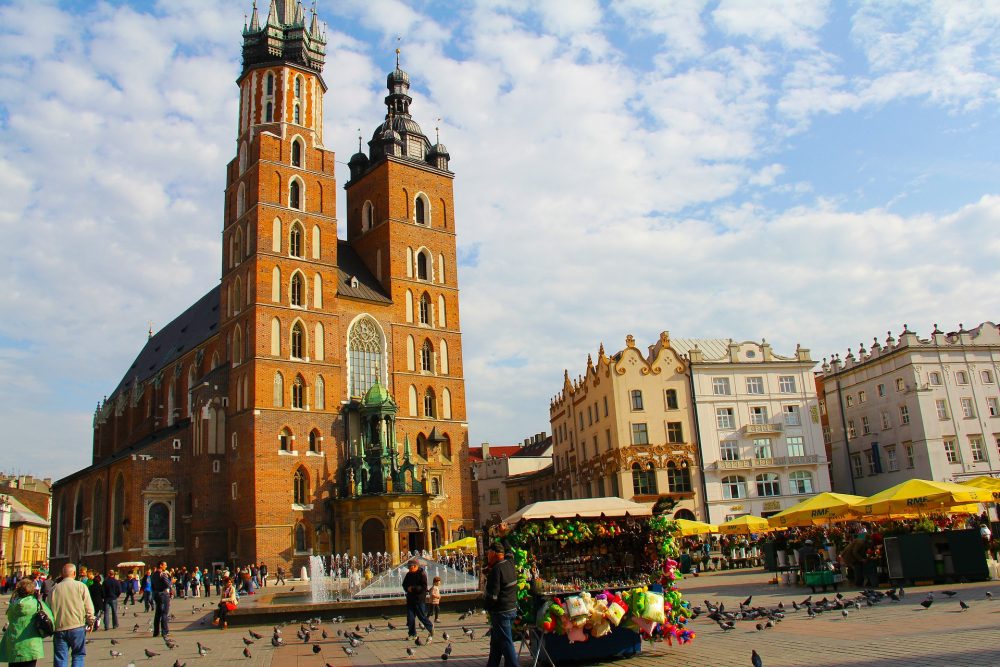
Celebrate the Assumption of Mary in Krakow at a local church | Image credit Pixabay
Poland
Krakow
If you are going to spend your holiday in Poland, don’t miss the August 15 celebrations! This is a unique day where old pagan traditions mix with folk and Catholic traditions — to such an extent that sometimes it’s difficult to recognise where sacrum ends and profanum begins.
The Assumption of the Virgin Mary is also known as The Lady of Flowers holiday. Why this name? There are at least two reasons. Firstly, the religious dogma says that Mary, mother of Jesus, did not die, but fell asleep on Earth and woke up in heaven. Instead of a body, people found fresh flowers and herbs at her grave. The other reason is that mid-August is the time of harvest in Poland. This big, colourful festival to celebrate the end of field work has endured in Polish culture since pagan times. It is a time to dress up, using flowers and herbs for decoration, share fresh bread and beer, and dance for as long as you can move your legs.
August 15 is also the same day Poles celebrate the Day of the Polish Army, when, in August 1920, soldiers won the victory in the famous battle of Warsaw. This is known in Poland as the “Miracle on the Vistula River.”
If you’ve visiting Krakow, you can choose between going to the church with a bouquet of flowers for blessing, participating in the colorful harvest holiday — where local beer is drunk and people are dressed in folk clothes — or watch a military parade in the city centre. You could try to take part in everything that day. At the end of the day, the results will be similar: you’ll likely have drunk and eaten a lot! All the while wearing flowers on your head.
Warsaw
If you happen to be in Warsaw on August 15, you can participate in two big celebrations. The first derives from the Catholic tradition and the second commemorates the history of Poland. During the Assumption of the Virgin Mary (who is also known as Our Lady of Herbs), you’ll see people bringing bouquets for blessing in churches. According to the old tradition, seven different herbs, cereals, flowers and even vegetables are picked, formed into decorative bunches and carried home after the Holy Mass. Poles hang them in chambers and believe they will protect them against disease. On this day, the scent of chamomile, mint, basil, rosemary and lovage fill the air. In the countryside, celebrations take place at the end of harvest, so this date is also an opportunity to give thanks for the harvest and ask for a blessing for further work.
The Feast of the Polish Armed Forces is a national holiday commemorating the anniversary of the Battle of Warsaw during the Polish-Soviet War in 1920. This year Poland celebrates 100 years of regaining independence, so this year’s parade through the city centre will be big, with 3,000 people and 500 horses representing changes in uniforms and weapons from the Middle Ages up until today. The official pageantry will be held in Piłsudski Square near the Tomb of the Unknown Soldier and plenty of other events are available at the Museum of the Polish Army.
Mallorca, Spain
Nowadays, people believe less and less in religious customs and festivities. However, August 15 is considered the religious summer festivity par excellence for the Mediterranean. Since the 14th century, the feast day of the Assumption of the Virgin has been honoured in a special way. Celebrations include a series of rituals, theatrical performances and protocols that accompany the mystery of death and the coronation of the Virgin with the scent of basil.
Palma also celebrates this festival its own way. The city churches remain open, so visitors can contemplate the images of the reclining virgins. The Consell de Mallorca publishes a program that includes churches in Palma and Mallorca where you can visit the beds of the sleeping virgins. Apart from this religious manifestation, many villages of Mallorca also celebrate with festivities in a more playful way.
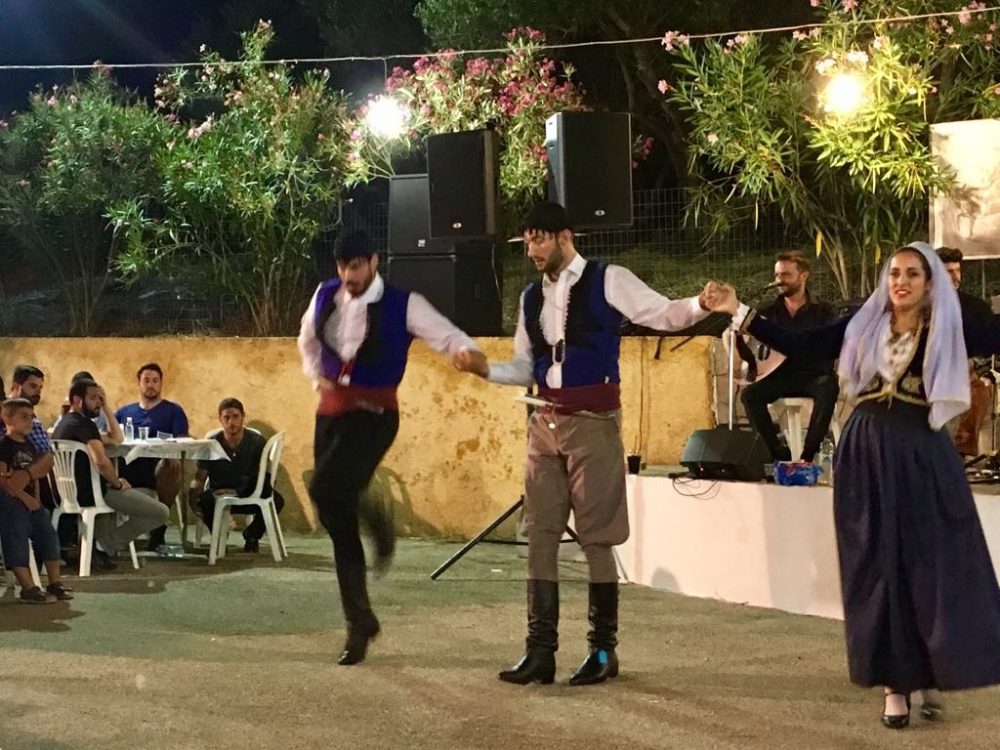
Greece is a lively time to visit during the Assumption of Mary | Image credit Athens Urban Tours
Greece
Mid-summer is already a busy time in Greece. But August is a lively time in the country, due to the feast of the Assumption of Mary, also known as Assumption Day. As one of the major celebrations of the Orthodox Church, it’s a great excuse for Greeks to holiday and follow the non-stop celebrations and parties taking place. Religious festivals and saints’ name days are an important celebration in Greece, whatever your religious beliefs.
During this period, some places are marked as top pilgrimage destination, while great traditional festivals called “Panigiria” also take place. Every city’s church celebrates the Virgin’s icon by adorning it with flowers and holding a formal mass. However, if you find yourself in the main city during this time, do like locals do and organise a few days trip to the countryside to feel this special festive atmosphere.
Crete
If your trip destination is the island of Crete during Assumption Day, don’t miss most famous celebrations of the island in the Monastery of Panagia Chrissoskalitissa. The historical building is located on the southwestern side of the island, near Elafonisi Beach with its majestic green-blue waters, pink sand and exotic atmosphere. Built on the top of a rock, this whitewashed monastery includes one gold step. According to tradition, the colour of this step is only revealed to the sinless. Leave aside your sins and enjoy live Cretan music and plenty of food.
Most villages in Crete celebrate Assumption Day in their own special way. Certain villages organise their own Panigiri, where local musicians who are masters of the lyra and lagouto instruments gather in the village. There they play traditional music, while people dance in the main square, drink local wine and eat food – all offered for free. Don’t be upset if you hear celebratory gunshots!
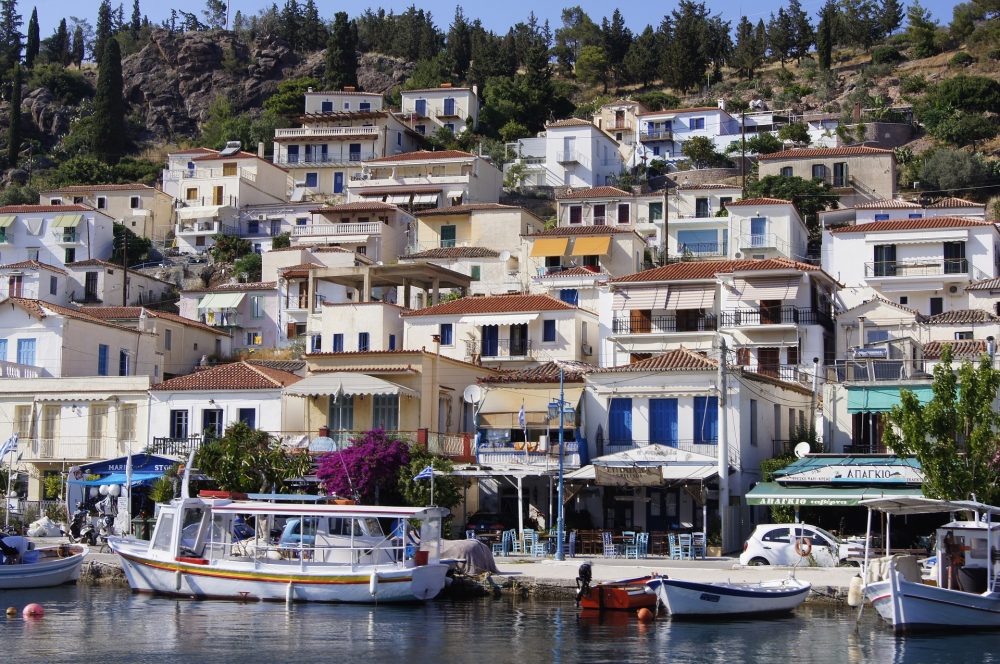
Join in the celebrations on the island of Paros | Image credit Pixabay
Near Athens
If you’re in Athens, catch a ferry and in a couple of hours you’ll be in the islands of Tinos or Paros: two of the most famous places for Assumption Day celebrations in Greece.
The Church of Panagia Evangelistria (Virgin Mary) is the reason why Tinos is linked with religious festivities and a top pilgrimage destination. Every August, thousands of believers flock to the island to pay respects the miraculous image of Virgin Mary. Celebrations start on August 15 and run through to August 23, incorporating the commemoration of the sinking of the warship Elli in 1940 by Italians. While you’re here, don’t miss the local festival cuisine!
The island of Paros is a popular spot to commemorate Assumption Day, as it is home to the Paleochristian Virgin Mary of Ekatontapiliani Church in Parikia, one of the oldest and best preserved Christian churches. After the Epitaph procession of Panagia Ekatontapyliani, created in the 17th century, people start dancing to the local traditional rhythms and enjoying local delicacies and wine. At night, in the nearby port of Naoussa, boats approach the pier with lit torches reenacting the arrival of pirates.
Thessaloniki
If you are in Thessaloniki, follow the annual pilgrimage of Pontians to Panagia Soumela Monastery, located on the slopes of the Vermion Mountains. The church holds the holy image of Panagia, crafted by Evangelist Luke. It was built in 1951 by Greek refugees, in memory of the historical Orthodox Monastery located on Mount Mela, near Trabzon (now part of Turkey). Greek Pontians still preserve their strong traditions, so get ready to experience the procession of the miraculous icon. Dressed in characteristic Pontian costumes, locals listen to traditional songs played by Pontian bands from Macedonia, and engage in mystical Pontian dancing.
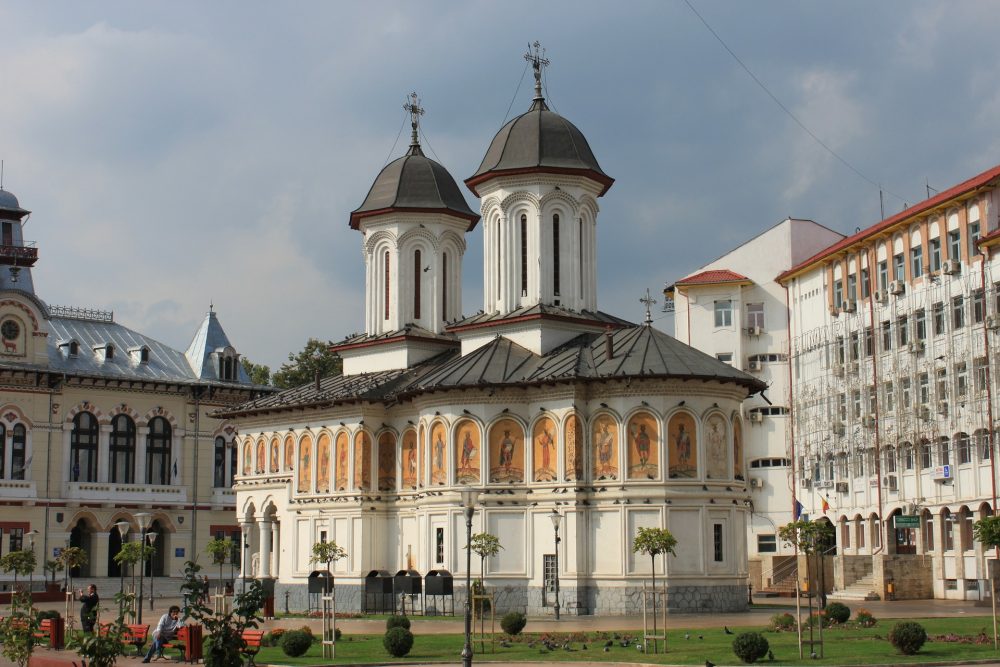
Churches all over Romania welcome pilgrims | Image credit Pixabay
Romania
If you plan a visit to Romania around mid-August, know that August 15 is a national public holiday in honour of Saint Mary’s death. Both Orthodox and Catholic churches pay their respects for the Dormition of the Mother of God on this day. The Assumption of Mary, or simply Assumption Day or St. Mary’s Day, is one of the most important feasts in the Christian calendar. The event honours the belief that when Mary died, her body did not decay but was “assumed” up to heaven and reunited with her soul.
During the day churches and monasteries all over the country, especially with Saint Mary as their holy patron, will honour and welcome pilgrims with a special service dedicated to the Dormition of the Mother of God.
Saint Mary’s Assumption Day is also known as the Feast of Our Lady of the Harvest, the patron saint of the Navy. And so, the date corresponds with the Day of the Romanian Naval Forces. Shows featuring navy ships, helicopters, divers and parachute-jumping are held in Constanta, Romania’s biggest port, and often attract thousands of visitors.
The day also represents the beginning of fall sowing, as well as the start of descent of shepherds coming back from the mountains and the first grape harvest. Take the opportunity to try unfermented wine if you get the chance — one of Romania’s most exquisite flavours.
Europe’s best-loved dishesWhile you’re likely to find Asian fusion in Denmark or pizza in Poland, if you want to travel like a local (and we know you do), a great start is knowing some traditional foods in the destinations you visit. The following is a list of foods with a rich history that have stood the test of time; foods with deep ties to the culture and the ways in which a country has developed over time. These foods encourage us to learn more about a place, well beyond museum visits and guidebooks. If you’re curious about some of the best-loved local foods across Europe, we have got you covered.
Czech Republic: vepřo, knedlo, zelo
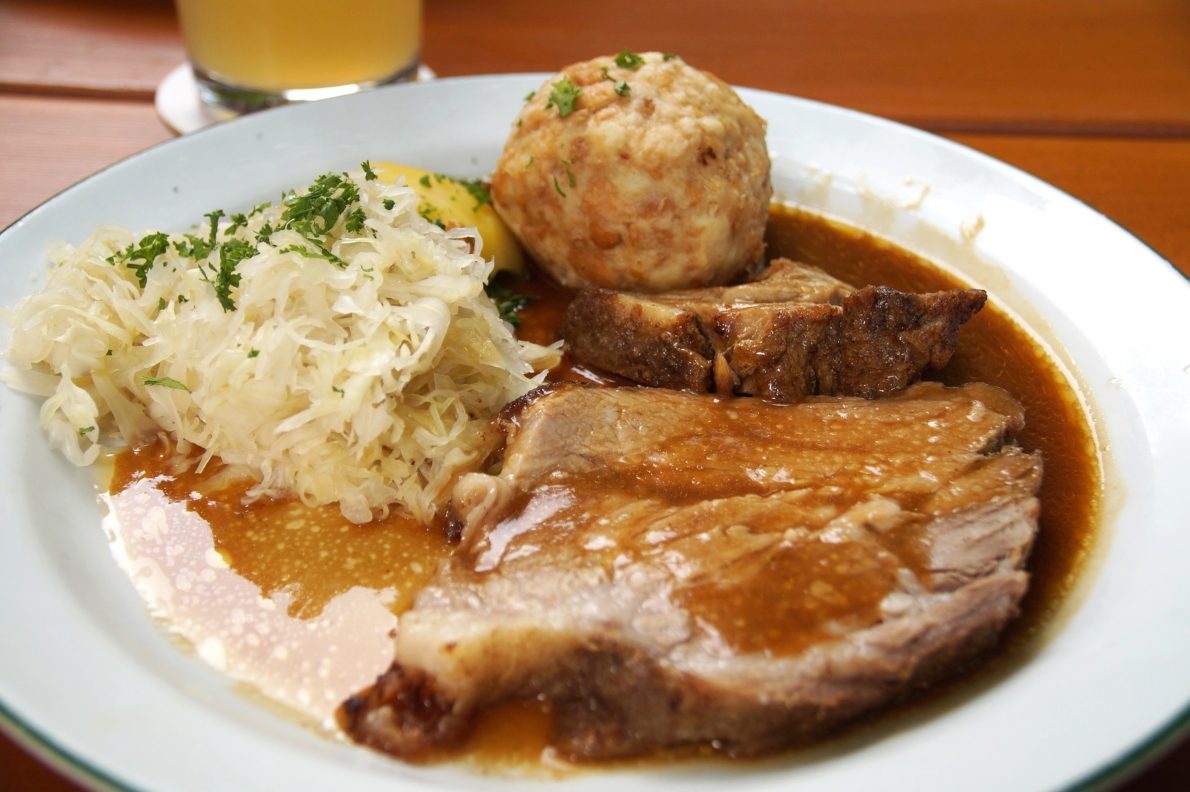
Sampling pork, dumplings, and cabbage in the Czech Republic | Photo by Prague Urban Tours
It’s not easy to pick one specific dish that could represent the cuisine of the Czech Republic in all of its variety. In fact, we have a whole range of unique foods, all of which could compete for the status of a national dish. But we think most people would agree that vepřo, knedlo, zelo is an appropriate representation of the Czech culinary scene.
The literal translation of vepřo, knedlo, zelo is “pork, dumplings, cabbage,” which is quite a telling name. To be even more specific, this truly Czech delight consists of roast pork in delicate gravy, our world-renowned dumplings (which you might know under the title of knedlíky), and either red or white braised cabbage. It’s tender, it’s juicy, and it simply bursts with flavour. These three ingredients are the absolute staples of Czech cuisine, so it makes sense to try them all in one go with a portion of this absolute classic.
Denmark: stegt flæsk med persillesovs
Denmark: stegt flæsk med persillesovs
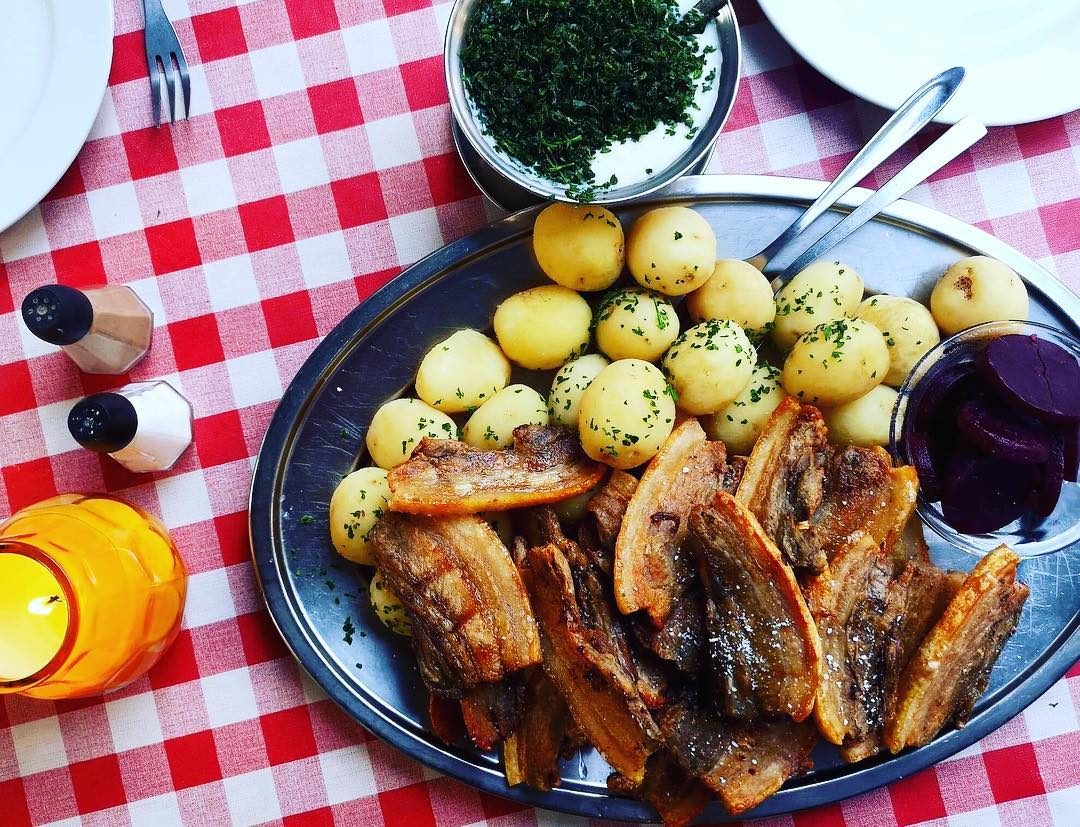
Make sure to order crispy pork belly with parsley sauce and boiled potatoes in Denmark | Photo by Copenhagen Urban Tours
Make sure to order crispy pork belly with parsley sauce and boiled potatoes in Denmark | Photo by Copenhagen Urban Adventures
As far as food goes, crispy pork belly with parsley sauce and boiled potatoes (stegt flæsk med persillesovs) is without a doubt the most traditional dish you can come across while you’re in Copenhagen or Denmark. In 2014, our government set out to find the most Danish dish – and this hearty option came out on top with more than 60,000 votes. It consists of crispy pork belly with boiled potatoes and a white, creamy parsley sauce with chopped parsley on top. The dish can be traced all the way back to the 1800s and has, during its history, been considered a poor man’s dish since it was one of the fattier dishes and pork was very easy to come by. If you didn’t know, Denmark actually still has more pigs than people!
If you find yourself in Denmark try some stegt flæsk med persillesovs, which is served on many menus in Copenhagen and throughout the country.
Greece: souvlaki & gyros
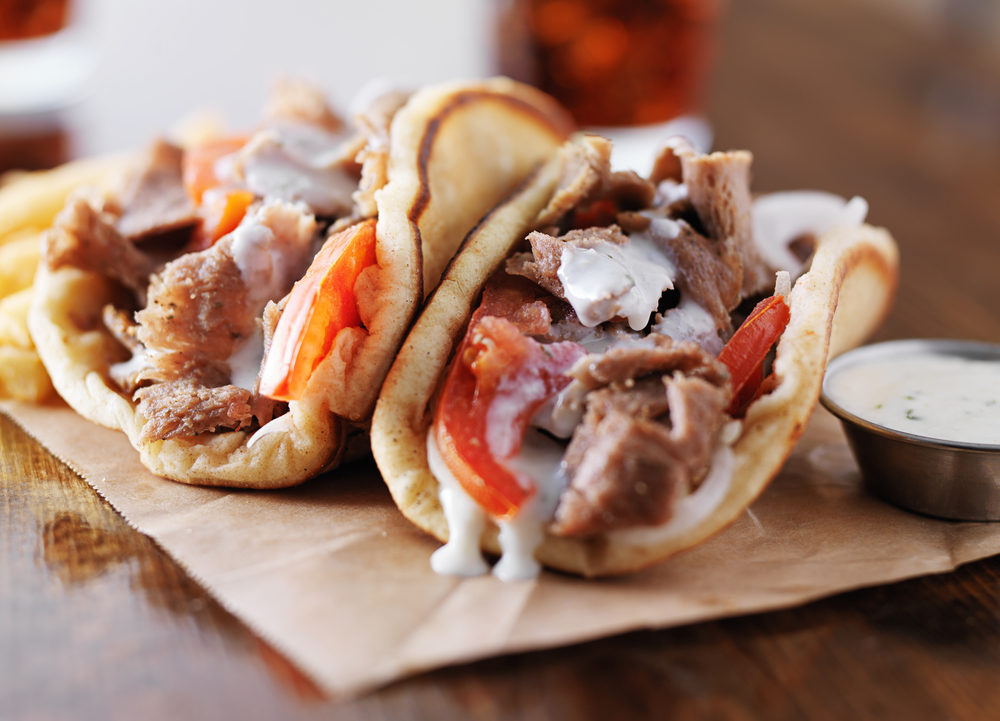
Greek gyros with tzatziki sauce – a must try | Photo by Athens Urban Tours
If you visit Greece, you should definitely ‘go for souvlaki’ as Greeks simply say when they mean the trio of classic Greek fast foods: souvlaki, gyros, and pita souvlaki. All of these dishes are served in the same kinds of venues, called a souvlatzidiko, a Greek culinary institution. Souvlaki (sometimes known as kalamaki), first appeared in the town of Livadia in 1951 but with origins dating back to ancient Greece, as archaeological artefacts have revealed. The name refers to the wooden skewer (or “little reed”) the meat is cooked on. Skewers are filled with cubes of meat that have been marinated overnight, broiled over charcoal, and finally salted and peppered.
Gyros consist of either pork or chicken meat placed on a large metallic skewer and broiled while the skewer is rotating on a vertical rotisserie. The cooked and sliced meat is then wrapped in a slightly grilled flatbread called a pita and then filled with tomato, onion, tzatziki sauce, and French fries. In the case of pita souvlaki, the gyro meat is replaced by souvlaki inside the grilled pita. No matter which one you order, you won’t be disappointed.
Hungary: goulash
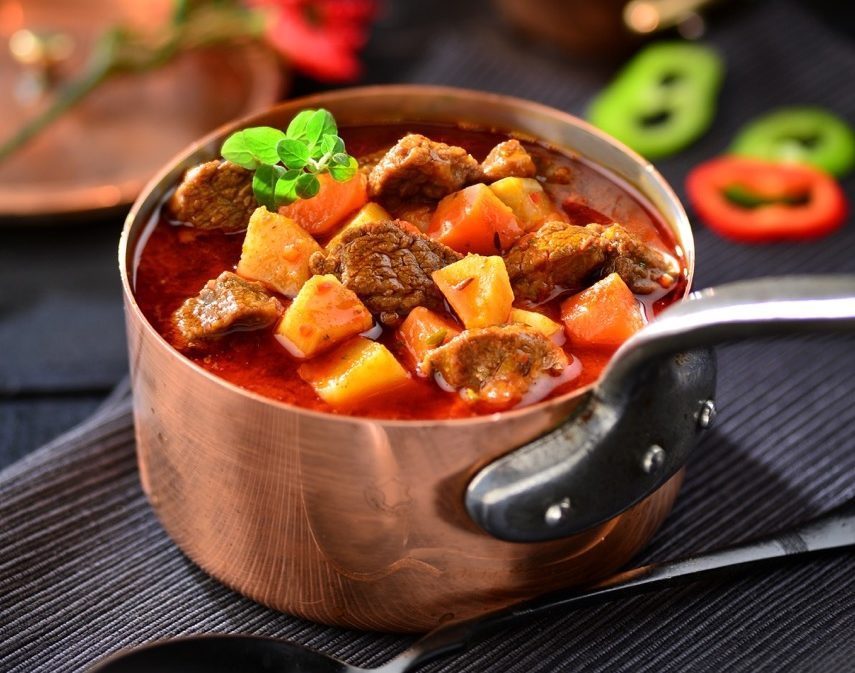
A hearty bowl of goulash | Photo by Budapest Urban Tours
The true character of Hungarian cuisine is based around simple, hearty dishes rich in flavour – the kind that stick to your ribs. It’s safe to say that the most famous Hungarian dish undeniably goes to goulash, a filling, paprika-flavoured soup with beef and some vegetables. Without going too deeply into the details, goulash started out as a kind of a stew, but didn’t include paprika at first as the Hungarians were not introduced to it until the mid-18th century.
But for goulash to become what it is today, paprika was essential. The ground pepper gave the dish not only a nice colour, but a distinct taste. Oddly, goulash as a stew in Hungarian used to be referred to as pörkölt (a stew), while the name goulash (gulyás in Hungarian) referred to a soup. This is why even now, different dishes can go under the same name, sometimes even in Hungarian restaurants. But it doesn’t really matter if the dish is listed as pörkölt, a goulash, or even our other famous dish, the paprikash (paprikás), because they are all based on the essential combination of fat, onion, and paprika. As such, they are all closely related – and equally tasty.
Madrid: torrijas
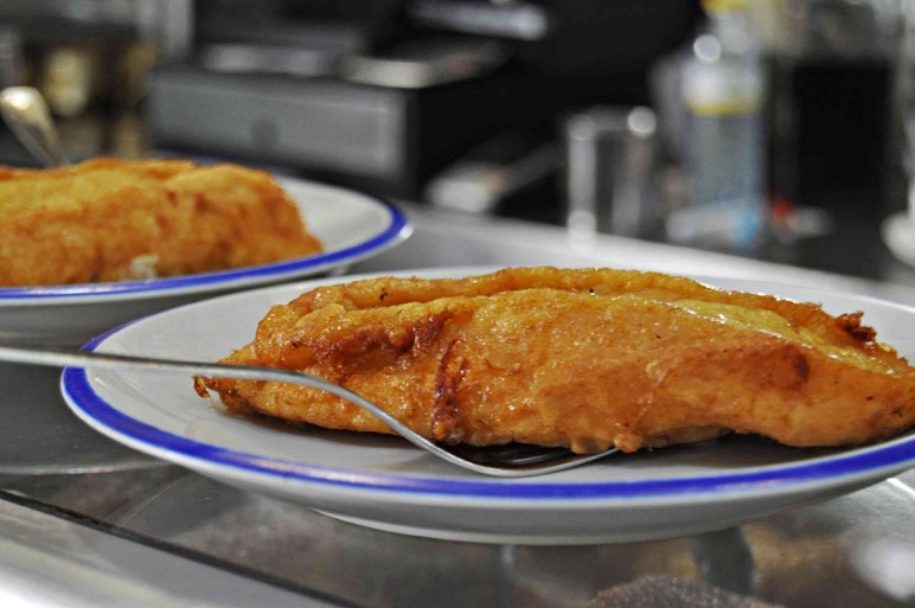
Torrijas of Spain | Photo by Madrid Urban Tours
Similar in nature to bread pudding and French toast – but with it’s own regional flair – the Spanish torrija is a simple yet must-try traditional dish with an interesting history that’s well worth seeking out on your next visit to Spain. If you take some basic ingredients such as bread, egg, milk or sweet wine, you can create one of Spain’s most traditional desserts. The torrija, a fried three-day-old slice of bread which has been dipped in milk, egg, honey and cinnamon (or in a sweet white wine and sugar), is now a must during Easter week in Spain.
If you visit Spain during Easter, all you will seem to see are people who eat, breathe, and fry torrijas. However, for those desperate to try a torrija outside Easter, you can find them at La Casa De Las Torrijas in Madrid.
Poland: pierogi
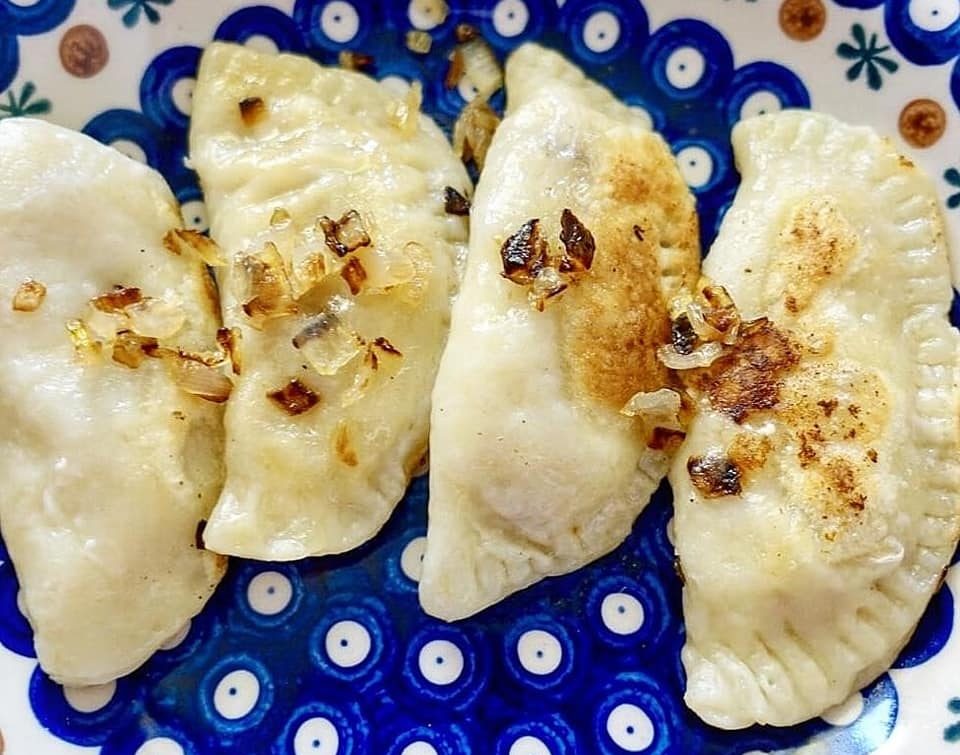
Is there anything better than a pierogi? | Photo by Krakow Urban Tours
If you’ve ever eaten pierogi, chances are good that you fell in love at first bite – and we wouldn’t blame you. The soft, pillowy dumplings filled with cheese and potato (among other possible fillings) is the ultimate in comfort food: filling, hearty, and totally satisfying, whether boiled or fried.
Pierogi are pierogi – there is no better world for this famous Polish dish, although some people try to translate the name as Polish dumplings, Polish raviolis or even small empanadas – none of which are accurate. For us, pierogi is something unique and integral to our culture. You can imagine them as half-circular dumplings stuffed with many types of different fillings, made out of unleavened dough.
The most classical fillings are cheese and potatoes, cabbage and mushrooms, or meat but you can also find sweet pierogi filled with strawberries or blueberries, and so many other flavours. For example, marzipan with poppy seeds or turkey with peaches, especially during the Pierogi Festival we celebrate in Krakow in the middle of August to honour the legendary, patron saint of pierogi: St. Hyacinth, the first Polish Dominican monk.
Romania: papanaşi
If we’re talking about Romanian national food, papanaşi should be given the title of best national dessert. Based on a recipe originating in Moldova (the northeastern part of Romania), this delicious fried dough and sweet Romanian cheese has the shape of a doughnut. The traditional sweet treat is then garnished with fruit jam and sour cream. The combination of the hot, fluffy doughnut with the cold, melty sour cream and the mouth-watering fruit notes of the jam will be instantly addictive for anyone with a sweet tooth. You’ve been warned.
Nowadays, papanași have become popular all over the country and restaurants compete to come up with the best rendition. If there was one thing, and one thing only that you could choose to experience Romanian cuisine, take our advice and go for papanași.
Slovakia: halušky
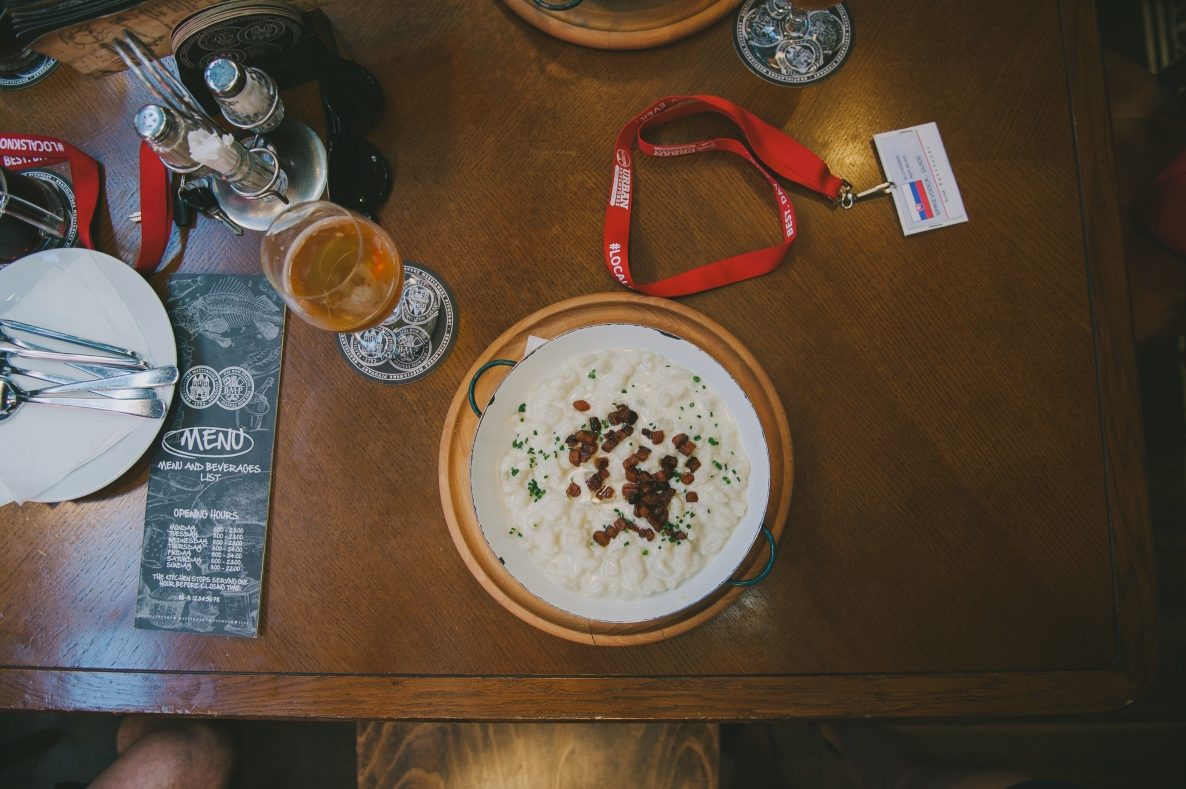
If you’re in Slovakia, try some Halušky | Photo by Bratislava Urban Tours
There’s no way you can visit Slovakia and not try a national dish called halušky. What is it, you ask? Halušky consists of what you might call a noodle (some would argue a dumpling — many English versions of menus have translated this as gnocchi). While we won’t sit here and argue semantics, we will say that basically all of these descriptions are correct. The noodle camp may be confused by the shape, which is more gnocchi-like than anything else, but hey, what are gnocchi but tiny potato noodles? And what are dumplings but larger versions of those potato noodles? The debate could go on and on, but the gist of it though, is halušky is the ultimate comfort food.
In addition to the noodles (or dumplings or gnocchi), halušky is smothered in a cheese sauce made of not just any cheese. No, this Slovak staple is smothered in sauce made with the traditional bryndza cheese, which #localsknow, is best when it comes straight from the farm (although it’s still just as tasty in its pasteurised form served up in Bratislava restaurants). This decadent dish is then topped off with a bit of hot, tasty bacon to provide the ultimate culinary solution for when you just want the travel foodie equivalent of your go-to childhood comfort food. It’s like having a long-lost Slovak grandma give you a warm hug.
If you’re looking to try the best food in one of our destinations, please join us for one of our group food tours, or if you have something more specific in mind, why not have a go at curating your very own private food tour?! Fill out the online form and a local member of our team in your chosen destination will be in touch to help you organise your best foodie day ever!