
The zapiekanka (a long, open-faced sandwich) was a beloved piece of my childhood. But not only mine — it was a miracle treat for a whole generation of Polish children who discovered it at the end of ‘80s (and who still buy one from time to time for sentimental reasons).
I will never forget the white trailer that parked close to my family home, and the old lady who sold from its window this first Polish “fast food” — a hot baguette with cheese and mushrooms. Zapiekanka. If I close my eyes I can still smell it, and remember that feeling of happiness, waiting in a long queue to spend the first bit of pocket money offered by my wealthy uncle.
For those who didn’t grow up in Poland, it can be hard to believe that an ordinary piece of bread and toppings became so popular. But in the past, if you could prepare the real-deal zapiekanka at home for a party, you’d feel like a local hero.
Today, zapiekanka is sold with many additional toppings, such as meat, all sorts of vegetables and even pineapple rings, but to be honest, I’m convinced that the traditional version is the best. The secret is to have a fresh baguette, good-quality cheese and mushrooms, and to bake it in the stove instead of in a microwave. And besides, the true flavour of zapiekanka comes from its nostalgia, and no fancy new toppings can beat that.
In our youth, what really shaped the taste of zapiekanka was this special feeling of trying something new and unknown on the one hand, and prohibited and secret on the other. It was the taste of change. The first-ever capitalist fast food in Poland tasted like liberty, and liberty tasted like a mix of ketchup and fried cheese. These were times when pizza, hamburgers or sushi were not available at all, so zapiekanka reigned on the Polish streets and undoubtedly started the street food fashion that is still in progress in Poland.
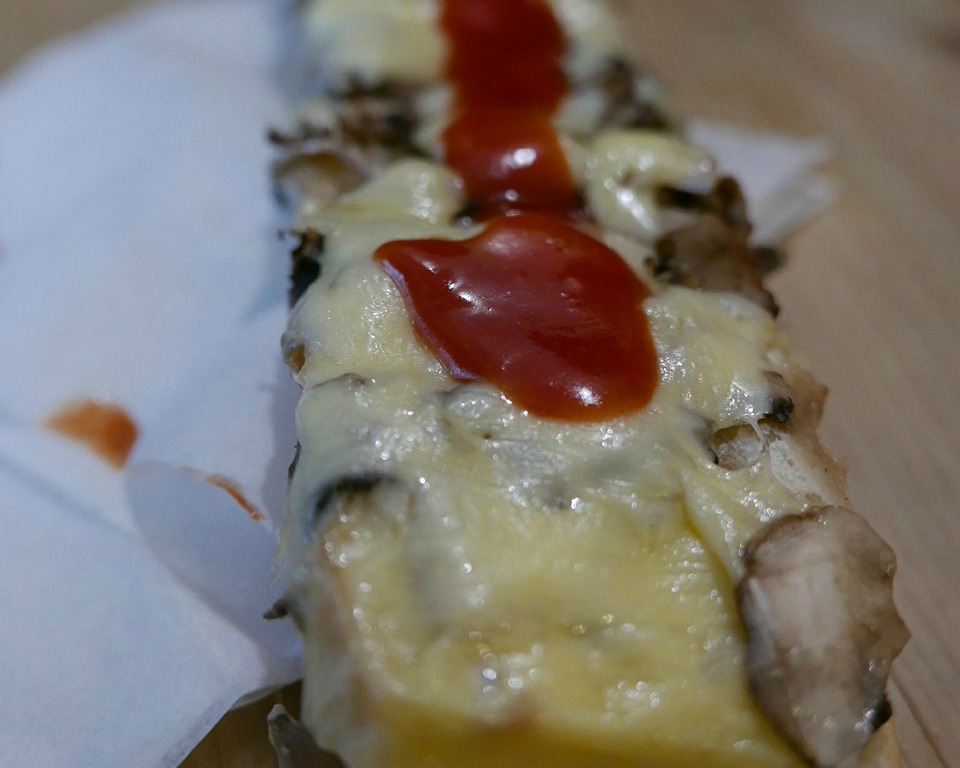
#localsknow where to get authentic zapiekanka | Photo by Krakow Urban Tours
In Krakow, you can buy zapiekanka everywhere, but local residents know that there’s only one place where this special taste has survived the turbulent years of transformation. A microscopic shop in the middle of Sienna Street, a stone’s throw from the Main Market Square, Zapiekanki od 1980 roku still maintains tradition and, since 1980, has been selling true zapiekanka.
Ms Marta opened her shop at a time when the cracks in Poland’s Communist regime were starting to crumble; many say her stall was the first fast food restaurant in Krakow — a place where on-the-go meals were sold, flauting the law forbidding American-style cuisine. Her toasted open-faced sandwiches became a symbol of freedom, and eating one was a way of fighting the regime. Today, Marta’s shop doesn’t hold the same political power, but for the locals who remember, her simple sandwich holds heavy, nostalgic significance.
Even though her tiny shop is open from 10am to 7pm, her busiest time is the lunch rush between noon and 2pm. On any day, you’ll find a range of Krakow locals grabbing lunch — construction workers on break from street projects, professors from the university, actors from the nearby theatre. Don’t be surprised if the person ahead of you in line, sharing local gossip with the owner, is a famous Polish celebrity grabbing a bite to eat.
People come here not just for the best hot sandwiches in the city, but to talk with the women who have been working here for some 30 years, Ms Martha and Ms Anna. For three decades, they have politely listened to all the problems and concerns of their customers; they have shared joys and heartache and seen the next generation grow up. It remains a place where I can go with my own mother and my four-year-old daughter and together we all can have a taste of my childhood and of liberty.
How to find it: 3 Sienna Street. It’s a small street between two of the main tourist points of the city, Main Square and Small Square, and is a one-minute walk from either square. (Psst, Small Square is also the meeting point for our Food by Foot tour.)
What to order: Traditional zapiekanka (no extra toppings!); fresh beetroot juice.
Pierogi – the only Polish dish patronised by the saint.Krakow Food by Foot
Learn about Krakow through the best local restaurants and bars on this walking tour of traditional Polish food and historical monuments. After all, the best way to understand how to live a local is to eat like a local! Get your first taste of Polish cuisine and local beer over a discussion on Polish gastronomy in Small Market Square.
Pierogi – the only Polish dish patronised by the saint.
If you’ve ever eaten pierogi, chances are fairly good that you fell in love at a very first bite – and we wouldn’t blame you. But if you’re wondering where this popular Polish dish originated, we have a secret to reveal.
Pierogi are pierogi – there is no better world for this famous Polish dish, although some people try to translate the name as Polish dumplings, Polish raviolis or even small empanadas – none of which are accurate. For us, it is a national dish – something unique and integral to our culture. You can picture pierogi as half-circular dumplings stuffed with many types of different fillings, made out of unleavened dough, and then boiled. The most classical fillings are cheese and potatoes, cabbage and mushrooms, or different type of meat. For Polish people though, it is also ok to have as a main course (not dessert!) sweet pierogi filled with strawberries, blueberries or any fruit of your choice. Once a year, you can find even more offbeat fillings like marzipan with poppy seeds or turkey with peaches or… anything you can imagine to have inside such a small thing like pierogi. This special occasion is the Pierogi Festival we celebrate in Krakow in the middle of August to honour the legendary, patron saint of pierogi: St. Hyacinth, the first Polish Dominican monk.
According to legend, when he was travelling to Krakow to settle down and create the first Dominican congregation at the beginning of 13th century, he was stopped in a village nearby by a huge thunderstorm and he had to spend the night in the local house. He found the peasant and his family very sad because, due to the awful weather and heavy wind, all the crops were totally damaged and they were afraid there would be nothing to collect and they might die of hunger in the wintertime.
So St. Hyacinth promised to help and proceeded to spent the whole night praying to God and asking for mercy. In the morning, a miracle allegedly happened and the villagers discovered that the whole agricultural area had been reborn and they could come back to their fields and cultivate crops. They were so happy and grateful to St. Hyacinth that they took wheat and barley, made flour, and prepared for St. Hyacinth the first pierogi ever.
That is why pierogi is said to be a dish with a patron saint. There is even an old expression of surprise – “Swiety Jacku z pierogami!” (St. Hyacinth and his pierogi!) meaning more or less, ‘good grief!’
Still hungry for more? We suggest jumping on our online Traditional Pierogi Cooking Class (aktywny LINK kierujący do imprezy) or join us during your real visit to Krakow for Home Cooked Krakow workshop (aktywny LINK kierujący do imprezy).
You’ll learn even more about this famous and delicious Polish food and you will have a lot of fun while visiting our house to prepare pierogi according to our family recipe.
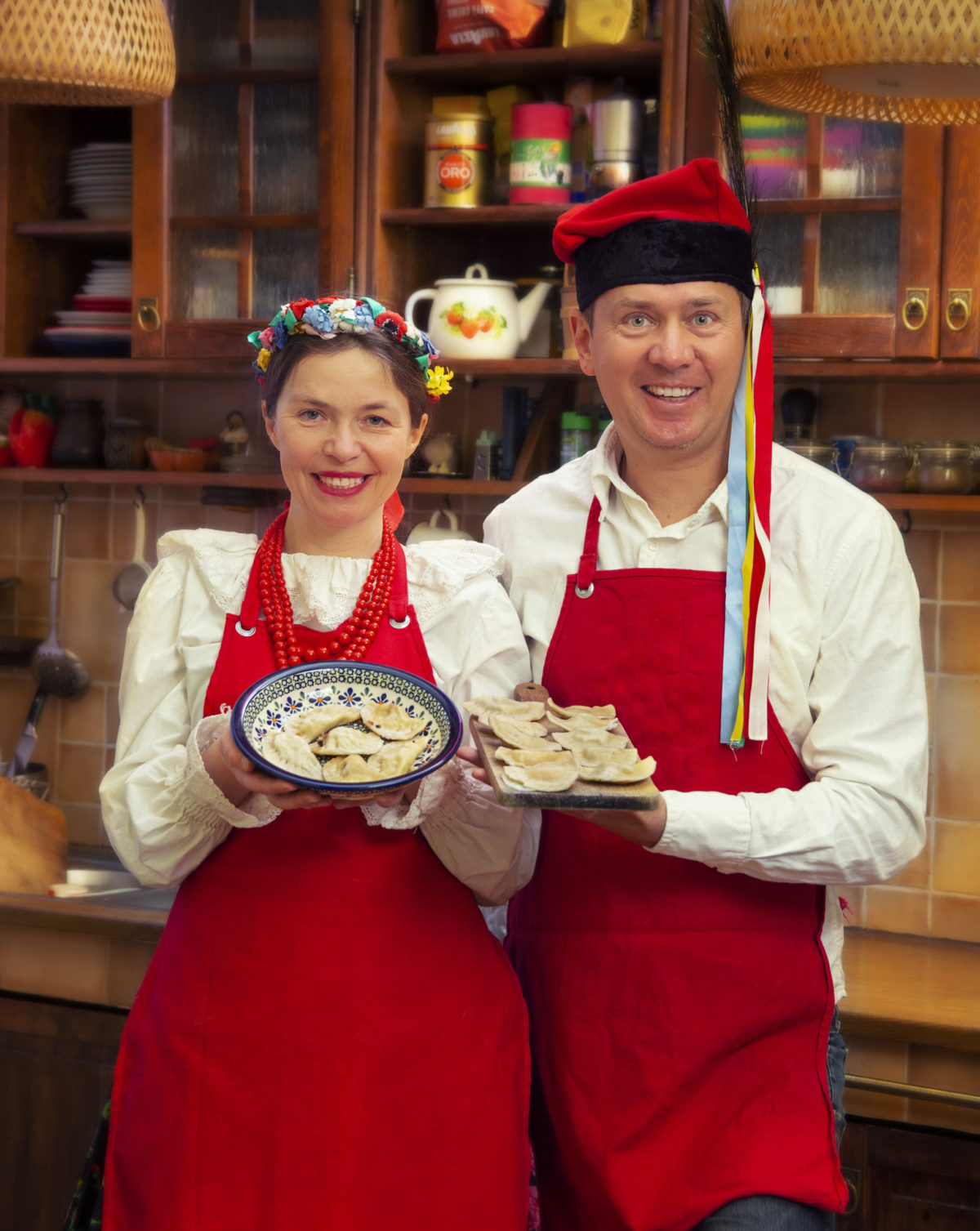

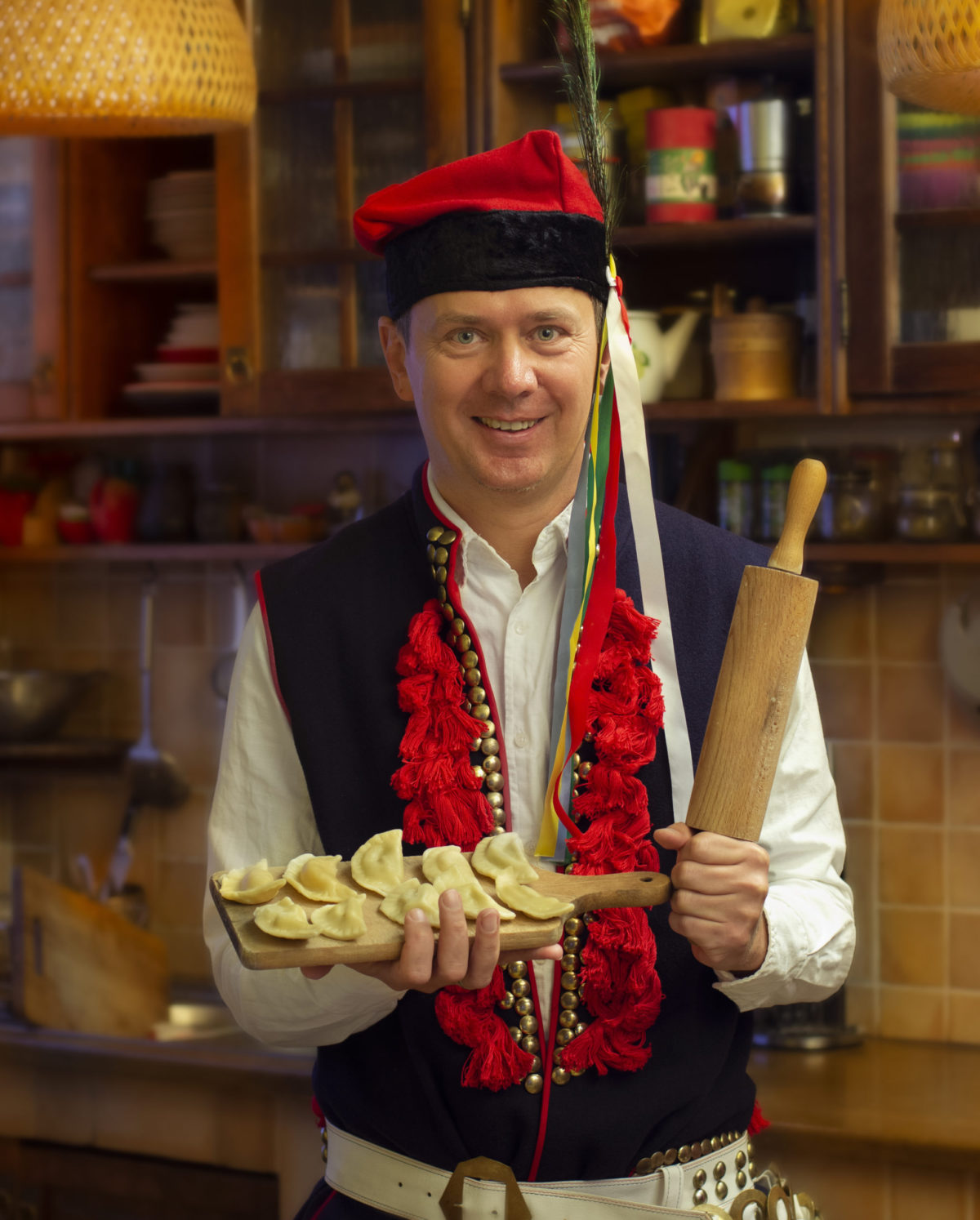
There’s more to Polish cuisine than pierogies — and in Krakow, there are serious street food stalls, cafes and bars serving up delicious snacks along with a dose of local culture and history. Here’s where to get the best street food in Krakow.
Complex Dolne Młyny
This complex is a real city inside a city, created in the 15,000-square-metre former Tobacco Factory, just a stone’s through from the Main Square of Krakow. All the industrial buildings were carefully renovated to integrate, in a creative way, the local community, start-ups, artists and tourists. Here you’ll find a variety of restaurants, bars, design shops and coworking spaces. Among others, you’ll find a vegan bar, a Mediterranean restaurant, a craft beer pub and a design forum, all so close to each other that you can visit all of them in a night. Incredible, isn’t it? 10 Dolnych Młynów Street.
Zapiekanki od 1980 roku
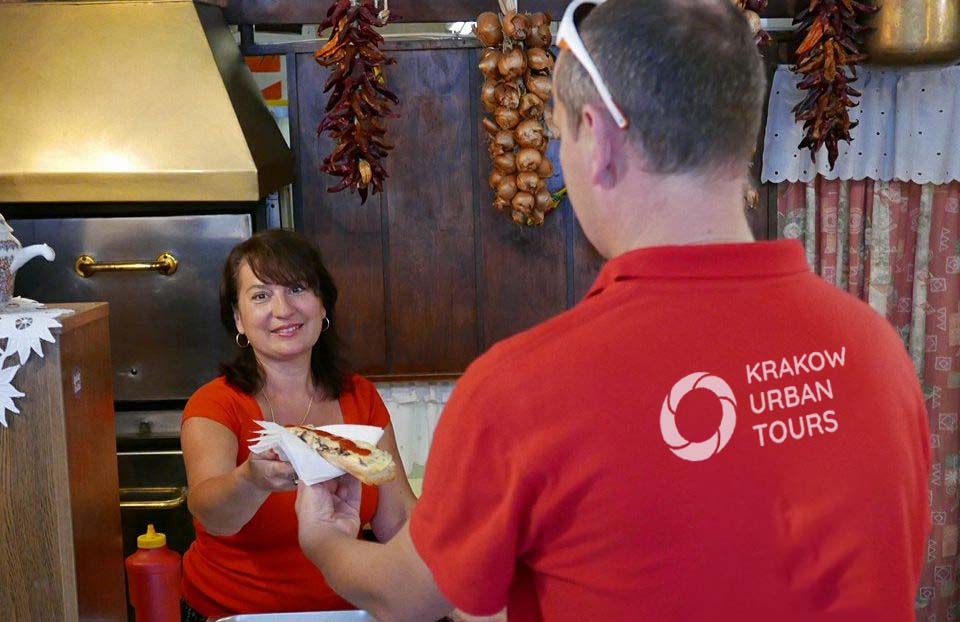
#localsknow where to get the best zapiekanka | Photo by Krakow Urban Tours
In Krakow, you can buy zapiekanka (a long, open-faced sandwich) everywhere, but local residents know there’s only one place where this special taste has survived the turbulent years of transformation. A microscopic shop in the middle of Sienna Street, a stone’s throw from the Main Market Square, Zapiekanki od 1980 roku still maintains tradition and, since 1980, has been selling true zapiekanka.
Ms Marta opened her shop at a time when the cracks in Poland’s Communist regime were starting to crumble; many say her stall was the first fast food restaurant in Krakow — a place where on-the-go meals were sold, flouting the law forbidding American-style cuisine. Her toasted open-faced sandwiches became a symbol of freedom, and eating one was a way of fighting the regime. Today, Marta’s shop doesn’t hold the same political power, but for the locals who remember, her simple sandwich holds heavy, nostalgic significance. 3 Sienna Street.
Hala Targowa
Another option for an unforgettable night in Krakow is to head back to the Kazimierz district, known for its nightlife, and spend the rest of the evening roaming local bars, talking to people and dancing. If you feel hungry at some point, don’t miss the excellent smoked sausages and fresh rolls with mustard, served right on the street directly out of an old blue Communist-era van at the busy market place Hala Targowa, located between Kazimierz and Old Town. 4 Grzegorzecka Street.
Judah Square
This is a great corner of the former Jewish district, Kazimierz, and is where you can find different food trucks and eat local snacks while checking out the huge white and black mural made by artists participating in the Jewish Festival some years ago. Reasonable prices and enthusiastic sellers are two of the biggest highlights of Judah Square. My recommendation is to try kumpir, a huge potato served with cottage cheese, green onion and a long list of other optional ingredients. Other good options are more international, but also very, very tasty: Belgian frites, Czech trdelnik or typical British fish and chips sold directly from ane original double-decker bus. Go inside, it’s well worth it! 16 St. Wawrzynca Street.
Stary Kleparz Farmers’ Market
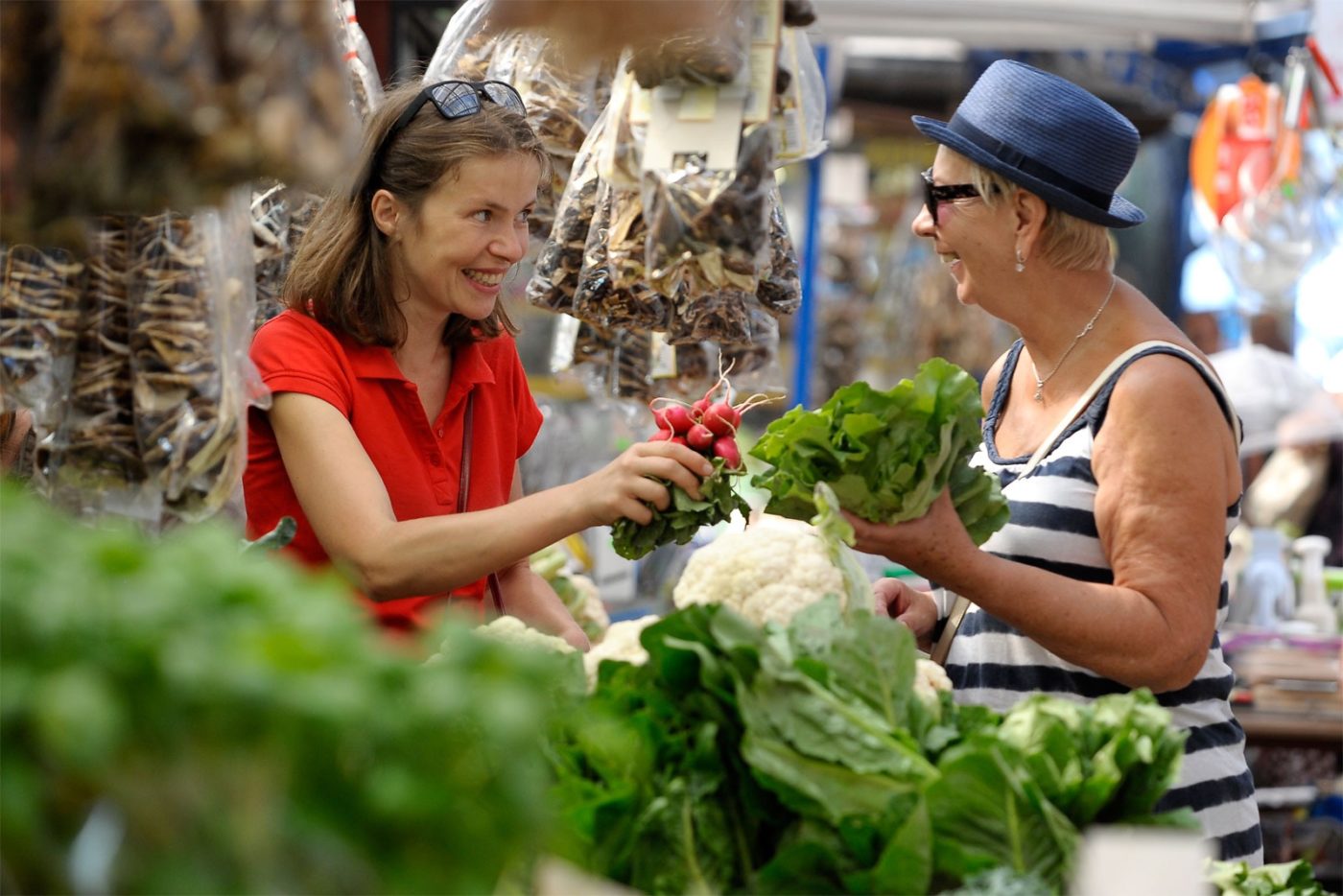
The Stary Kleparz Farmer Market is Krakow’s oldest market | Photo by Krakow Urban Tours
For the best food shopping in Krakow, we recommend Stary Kleparz Market, located very close to the Old Town, just north of St. Florian’s Gate, between Matejko’s Square and Dluga Street. Having run since the 18th century, this is the oldest and most colorful market, where farmers bring fresh fruit and vegetables to sell daily, and for quite reasonable prices, too. You will always find locals here looking for good bargains. Try some samples of fresh mountain cheeses oscypek and bundz, famous Polish sour cucumbers or sauerkraut, and locally made sweets. As there are some expats in the city, Kleparz also offers small shops selling typical Hungarian, Italian and even Arabic foods. Do not miss this place as they have great decor, good prices and fresh coffee that smells like heaven.
Plac Nowy
New Square is the most classic place for locals to hang out. Wherever you look, there is a bar or restaurant, and many locals will spend an entire night in this one spot. You could meet up with friends at one corner of the square and then spend hours visiting the different bars around it. Every Sunday morning there is a huge flea market, where I often go to look for vintage furniture, old records or handmade pottery.